
 Rina Putri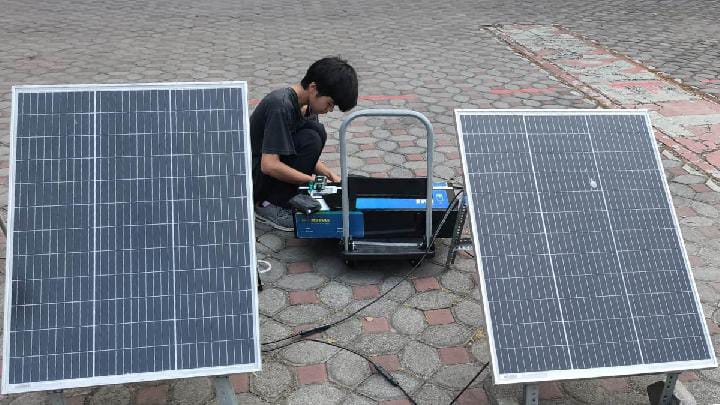
PrakarsaWarga.Com – A collaboration between Sebelas Maret University (UNS) Surakarta and Anurag University has introduced a new innovation in clean energy through the development of an Artificial Intelligence (AI) -based Battery Energy Storage System (BESS) . This technology is designed to improve energy storage efficiency while supporting more optimal utilization of renewable energy.
The research was developed as a solution to the challenges of using new and renewable energy sources (NRE), such as solar and wind power , which are characterized by unstable or intermittent electricity supplies. With the support of AI, energy storage systems are expected to maintain a reliable electricity supply while supporting the 2060 Net Zero Emission (NZE) target .
The head of the UNS research team, Chico Hermanu Brillianto Apribowo , explained that this research focuses on developing an energy storage system optimization model that takes into account two important factors, namely the uncertainty of renewable energy production and the decline in battery performance due to long-term use.
According to him, many energy storage systems have focused solely on battery capacity without considering degradation over time. This factor significantly impacts battery lifespan, operational costs, and even investment decisions.
AI Helps Manage Battery Performance Optimally
The research conducted within the International Research Network EQUITY THE Impact Rankings 2025 Program involved collaboration with Srikanth Goud B , an academic from the Department of Electrical and Electronics Engineering, Anurag University.
In this project, the team developed a device integrated with a Smart Battery Management System (BMS) . This system utilizes machine learning technology to automatically regulate the charging process, energy discharge, and battery operating strategies based on grid conditions and battery health.
Through this approach, the system can work more efficiently, extend battery life, reduce operational costs, and increase the flexibility of the electrical system.
Product Testing and Certification Stage
The developed device has now entered the testing phase at the Bandung Center for Standardization and Industrial Services for Materials and Engineering Goods (B4T) before obtaining product certification.
Testing is carried out to ensure the performance, safety aspects, and suitability of the device so that it is ready for use in various energy storage needs.
Besides being used as an energy storage system, this device also has the potential to be an alternative generator replacement with a capacity that can be adjusted based on user needs.
Supporting Indonesia’s Clean Energy Transition
The development of AI-based smart batteries is considered increasingly important as the government targets to increase electricity generation capacity to 69.5 gigawatts (GW) by 2034 , with around 76 percent of this coming from renewable energy sources.
This technology is expected to strengthen the clean energy ecosystem, starting from the integration of solar and wind power plants, energy storage systems, smart electricity grids, and more environmentally friendly energy services.
Not only does this innovation provide technological benefits, it also has the potential to create new economic opportunities through the development of the energy storage industry, reducing dependence on fossil fuel power plants, and supporting the achievement of the Sustainable Development Goals (SDGs) , particularly the goals of sustainable economic growth and global partnerships.
By leveraging artificial intelligence to manage battery systems, the collaboration between UNS and Anurag University is a significant step in accelerating the transformation towards a cleaner, more efficient, and more sustainable energy future.


 azel ginting